
Operations & management
When dispatch clocks disagree, the trip record stops making sense
A simple clock-synchronization standard helps dispatch, GPS, radio, and phone records tell one reliable sequence of events.
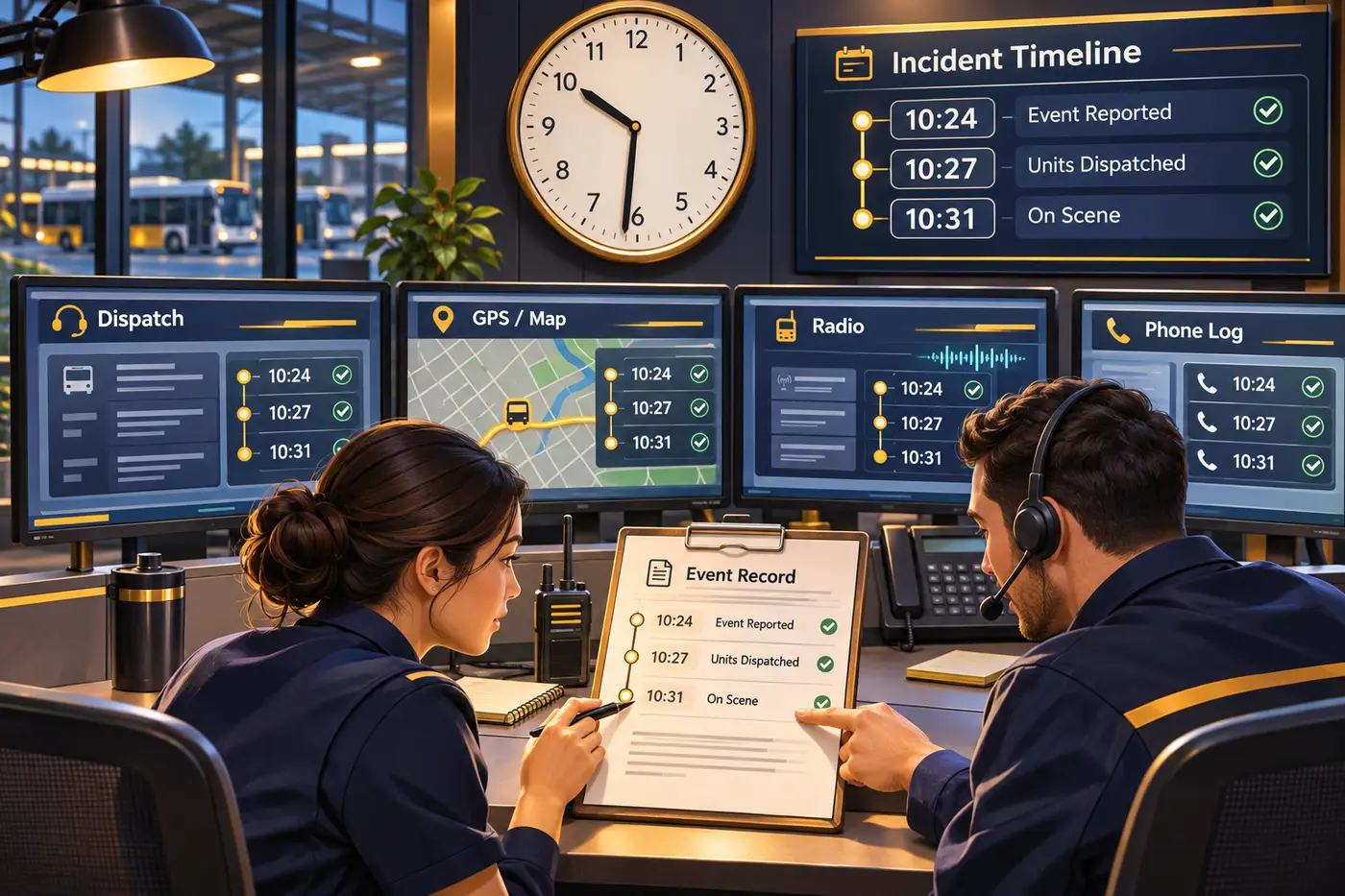
Original editorial illustration; not a photograph of Cathay operations.
A dispatcher records a call at 10:24, the vehicle system shows an update at 10:27, and the phone log labels the same event 10:22. Even a small mismatch can confuse an incident review, customer response, or on-time performance calculation. Operations teams need one time standard and a routine way to check that every system follows it.
Choose an authoritative time source
Document which system supplies the official operational time. The standard may be a network-synchronized server, dispatch platform, or another controlled source, but staff should know which clock wins when displays disagree.
Include the time zone and daylight-saving handling in the written rule. A timestamp without that context can become ambiguous when records are exported or reviewed later.
Inventory every clock that creates evidence
List dispatch workstations, vehicle tablets, GPS feeds, radios, phone systems, cameras, facility clocks, and paper forms. Note whether each device synchronizes automatically and who owns corrections.
Test the systems together rather than checking them in isolation. A clock that looks reasonable can still be several minutes away from the standard used by another record.
Create a short verification routine
Add a timestamp check at the start of a shift or another defined interval. Record the difference, correction, and person completing the check when a system cannot synchronize automatically.
- Official time source and time zone.
- Systems checked and observed difference.
- Correction method and responsible role.
- Escalation threshold for repeated drift.
Preserve the original record during review
Do not silently rewrite historical timestamps to make them line up. Keep the original values and document any known offset so reviewers can reconstruct the event sequence transparently.
Cathay Express Transportation can help agencies examine dispatch procedures, recordkeeping controls, and service-review workflows as part of transportation operations and management support.
Your next step
Review transportation operating controls
Connect with our team to discuss your needs and the available arrangements.