
Stretcher
Can a family companion travel on a planned stretcher trip?
Confirm companion seating, facility rules, responsibilities, belongings, and return arrangements before non-emergency stretcher transportation.
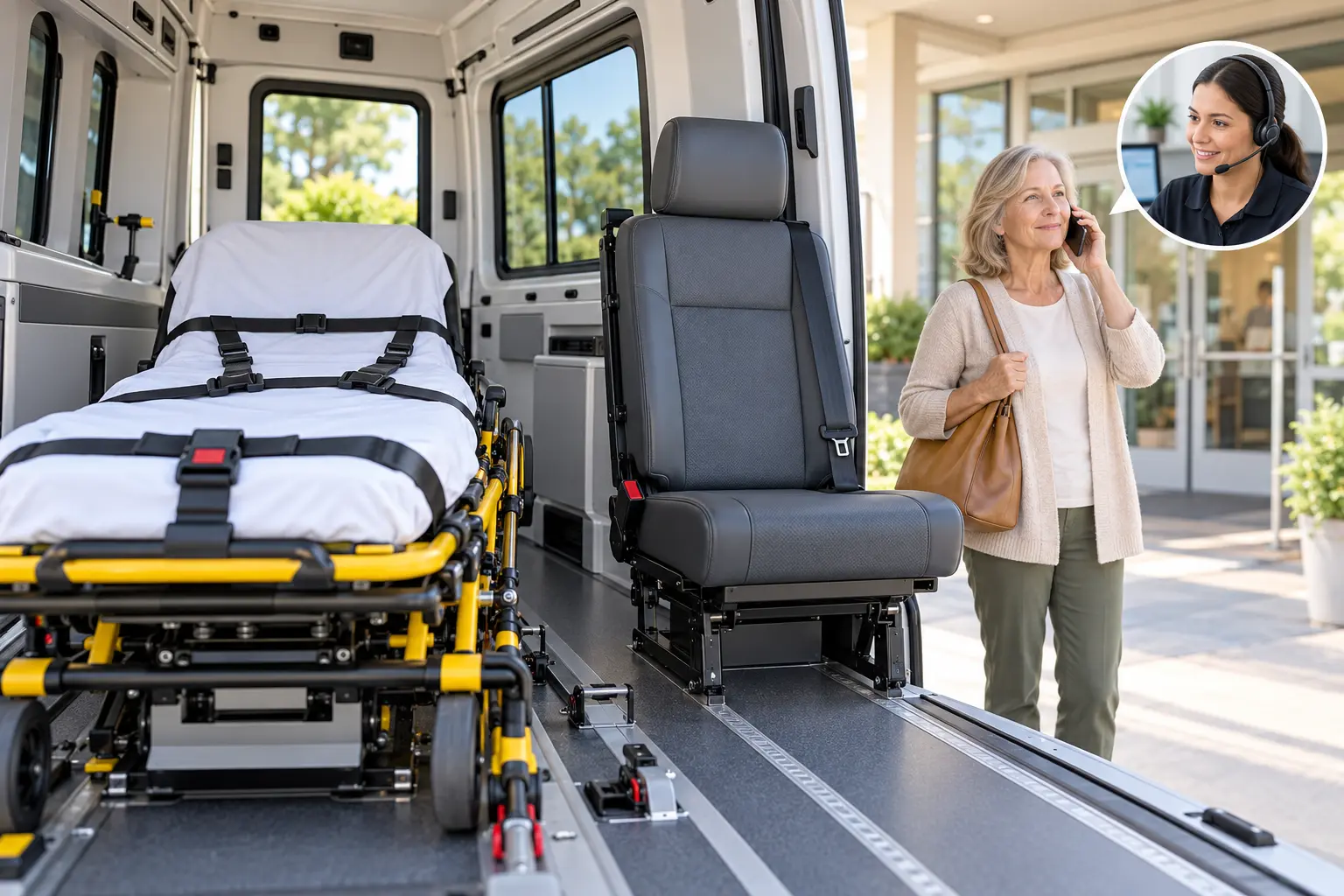
Original editorial illustration; not a photograph of Cathay operations.
A relative may want to accompany a passenger during planned non-emergency stretcher transportation, but companion travel should never be assumed. Vehicle seating, passenger needs, program rules, facility procedures, and the confirmed crew plan can all affect whether another person may ride. Ask before the trip so the family can make a backup plan.
Ask before transportation is confirmed
Tell the booking office that a companion would like to travel and ask whether a separate passenger seat is available and permitted for the specific trip. Give the companion's name and relationship if requested.
A companion should never ride on the stretcher, in an equipment area, or without an approved seat and restraint. If companion travel is not available, arrange a separate way for that person to reach the destination.
Define what the companion will do
Clarify whether the companion is coming for communication, paperwork, personal support, or destination coordination. A family member does not replace the transportation crew or receiving staff and should not be assigned lifting, handling, or clinical tasks.
If the passenger uses a communication device or needs someone to explain preferences, include that need in the booking instead of relying on an unconfirmed seat.
Coordinate belongings and facility access
Decide who will carry identification, clothing, documents, mobility equipment, and other personal items. Keep the transport path clear and avoid attaching loose bags to the stretcher.
Confirm where the companion will meet the crew, whether the origin and destination allow that person in the transfer area, and who will complete any required paperwork.
- Approved companion seat.
- Companion's practical role.
- Belongings and documents.
- Separate return plan.
Plan the return independently
The passenger and companion may not leave the destination at the same time. Confirm whether the companion's return is included, requires separate approval, or must be arranged another way.
This is non-emergency transportation. If the passenger develops urgent symptoms or needs emergency medical care, call 911 and follow the care team's direction rather than waiting for a scheduled stretcher trip.
Your next step
Discuss a non-emergency stretcher trip with a companion
Connect with our team to discuss your needs and the available arrangements.