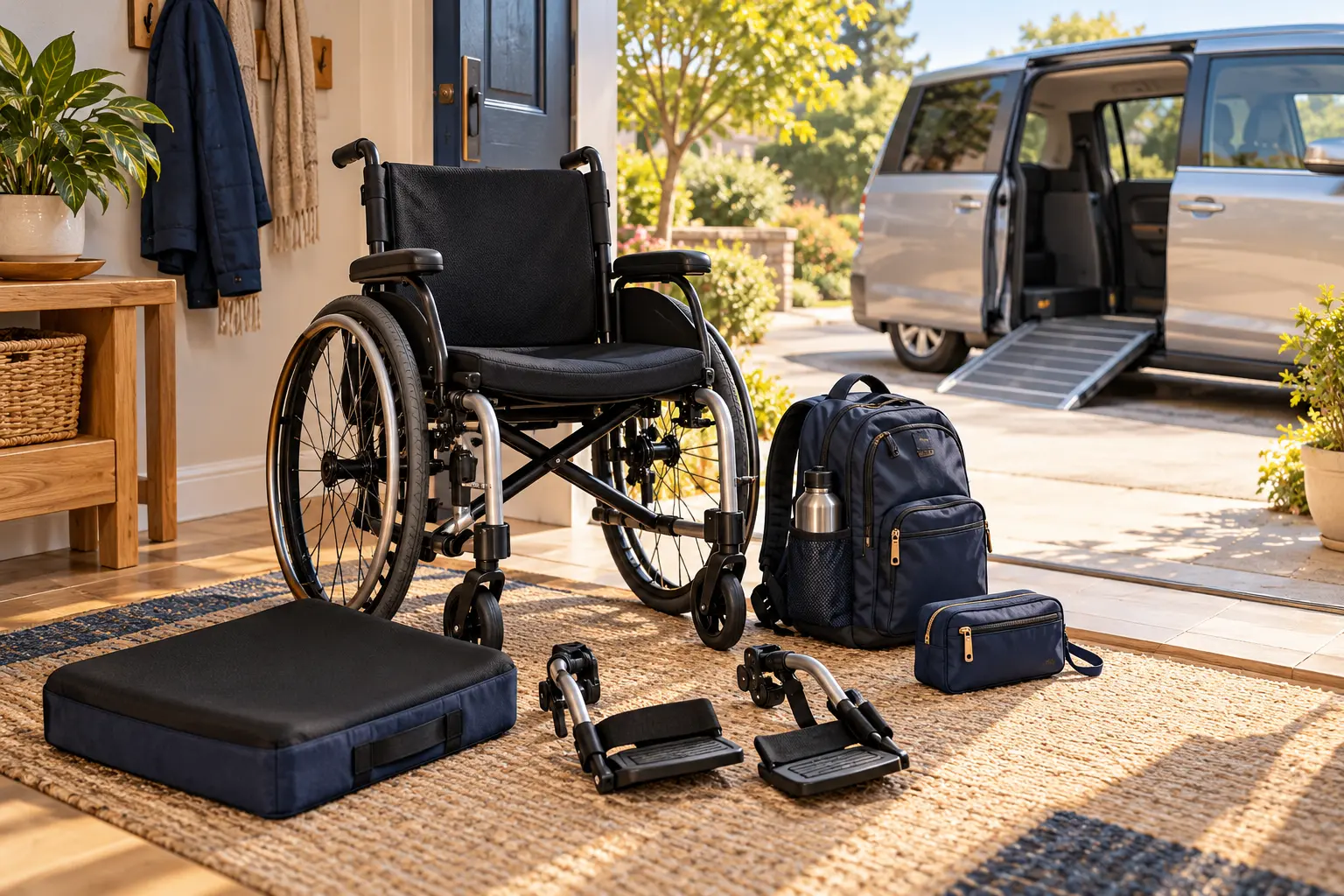
Ambulette
A larger wheelchair needs exact trip details before the ambulette arrives
Share device dimensions, configuration, accessories, access conditions, and transfer expectations so the provider can assess the trip.
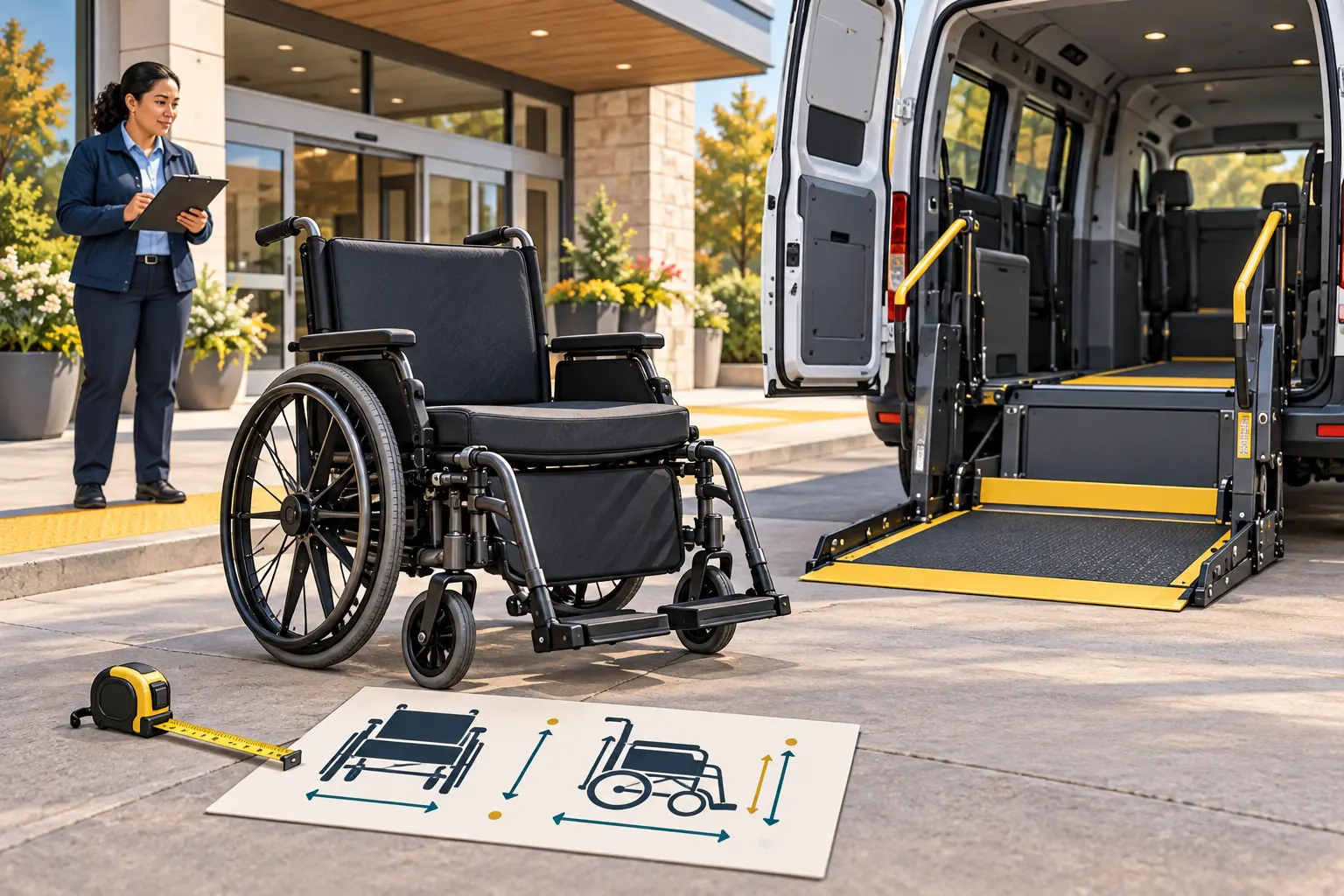
Original editorial illustration; not a photograph of Cathay operations.
Wheelchairs vary in width, length, weight, turning space, controls, and securement compatibility. A chair described only as “large” does not give a transportation provider enough information to assess the vehicle, lift, building access, or trip plan. Accurate device details should be provided before the scheduled ambulette arrives.
Identify the complete device
State whether the chair is manual or powered and provide the manufacturer and model when available. Measure overall width and length with the chair configured for travel, including leg supports, anti-tip devices, headrests, bags, and other fixed accessories.
Tell the provider whether parts fold or remove and whether the user can safely travel without any removable component. Do not remove positioning equipment simply to make the chair fit unless the passenger and qualified equipment or clinical team have approved that change.
Describe the passenger's travel configuration
Explain whether the passenger remains seated in the wheelchair during transport or has another provider-approved transfer plan. Identify any communication, positioning, or personal assistance needs that affect boarding and unloading.
The transportation provider must determine whether its equipment and service can safely accommodate the trip. Families and facilities should not promise that a chair will fit based on the appearance of a vehicle.
Check every access point
Measure narrow doorways and confirm elevators, ramps, thresholds, turns, and the approved vehicle loading area at both addresses. A chair that fits the lift may still be unable to reach the lobby or destination room.
Report temporary conditions such as a broken elevator, construction barrier, parked cars blocking a ramp, or a changed facility entrance as soon as they are known.
- Chair type, model, width, and length.
- Travel configuration and fixed accessories.
- Pickup and destination access.
- Responsible contacts at both ends.
Confirm the return separately
If the appointment changes the chair, adds equipment, or requires a loaner device, contact the transportation office before the return. The outbound vehicle plan may not automatically fit the new configuration.
Keep the discussion focused on transportation logistics. Questions about wheelchair setup, positioning, or clinical safety should be directed to the passenger's qualified equipment and healthcare professionals.
Your next step
Discuss a wheelchair transportation trip
Connect with our team to discuss your needs and the available arrangements.