Transit system planning
Route branches make sense on a map—but can riders identify the right bus?
Audit maps, timetables, destination signs, stops, and digital information together when one bus route serves multiple branches.

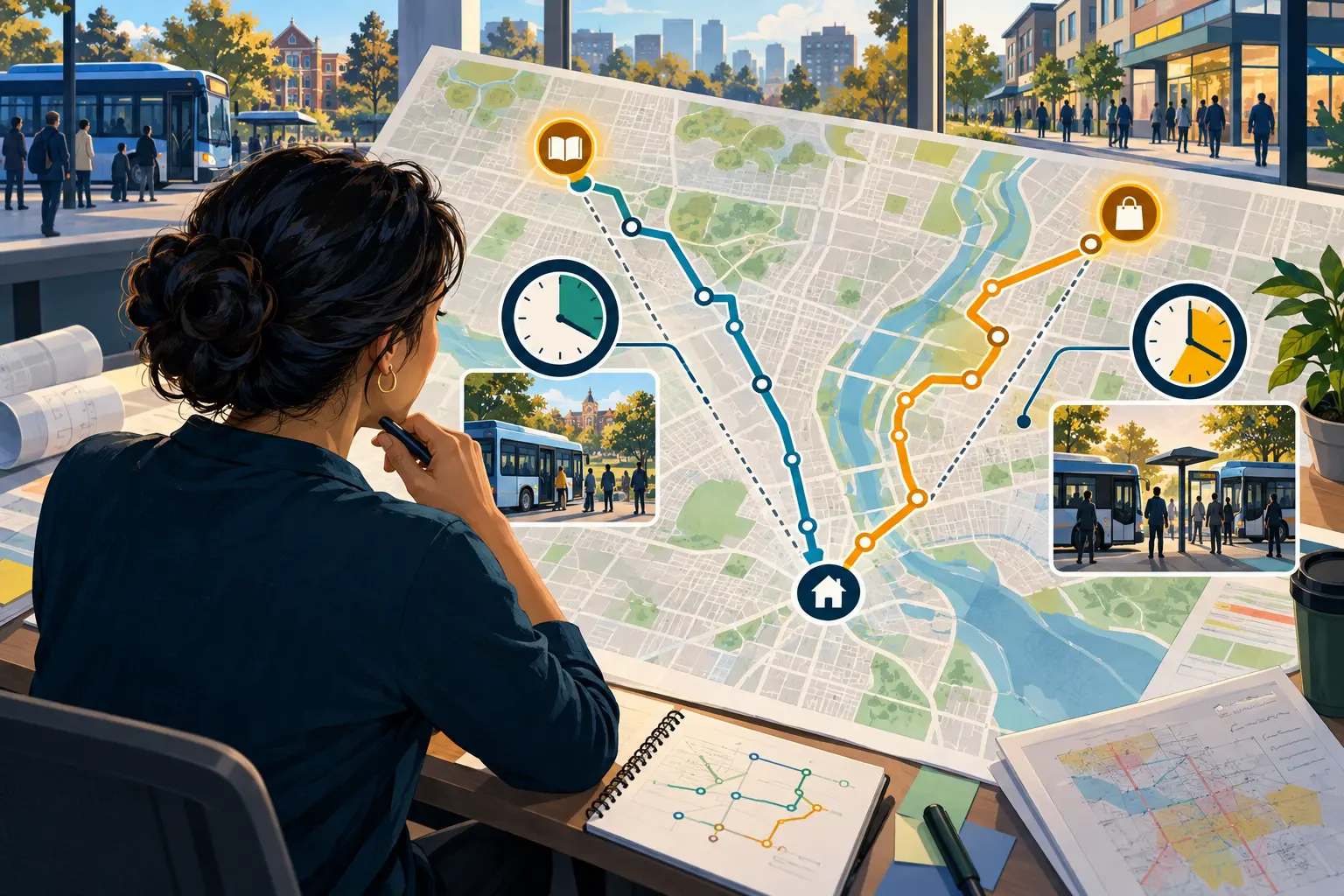
Original editorial illustration; not a photograph of Cathay operations.
A branched route can extend coverage without operating every trip over the same path. It can also create a passenger-information problem: two buses may share a route name for most of the journey but serve different destinations after the split. Planning should test whether a rider can identify the correct trip at every decision point.
Start with the passenger's decisions
List the questions a rider must answer: Which branch serves the destination? Does every trip travel there? Where does the route split? What destination sign should appear? Is the return stop served by the same branch?
Pay special attention to occasional riders, people transferring from another route, riders with limited English proficiency, and anyone who cannot easily compare several information sources at once.
Make every information channel agree
Compare the system map, route map, timetable, trip planner, stop signage, printed notices, destination signs, and vehicle announcements. Branch names, colors, letters, or destination terms should mean the same thing everywhere.
Avoid relying on color alone. A distinct name, symbol, letter, or destination can support riders who cannot distinguish the selected colors or who receive information in text-only formats.
Test the full journey in the field
Follow representative trips from origin to destination and back. Check what a rider sees before boarding, on the vehicle, at the branch point, and at the return stop. Include evening and weekend patterns when they differ.
Ask staff and riders where questions occur, then document the specific information gap rather than treating every problem as a map-design issue.
- Boarding decision.
- Branch-point explanation.
- Destination sign and announcement.
- Return-trip identification.
Tie branch complexity to a service choice
Compare the operating benefit of the branch with the passenger cost of confusion, missed trips, and complicated schedules. Options may include clearer branch identifiers, consistent destination signs, selected through service, timed connections, or a simpler route pattern.
Cathay Express Transportation can support agencies evaluating how route design and passenger information work together. The useful result is not only a cleaner diagram, but a travel decision a rider can make confidently.
Your next step
Discuss a transit system evaluation or planning study
Connect with our team to discuss your needs and the available arrangements.