Transit system planning
A stop-level ridership count needs more than a clipboard
Define the questions, locations, time periods, and quality checks before counting boardings and alightings.
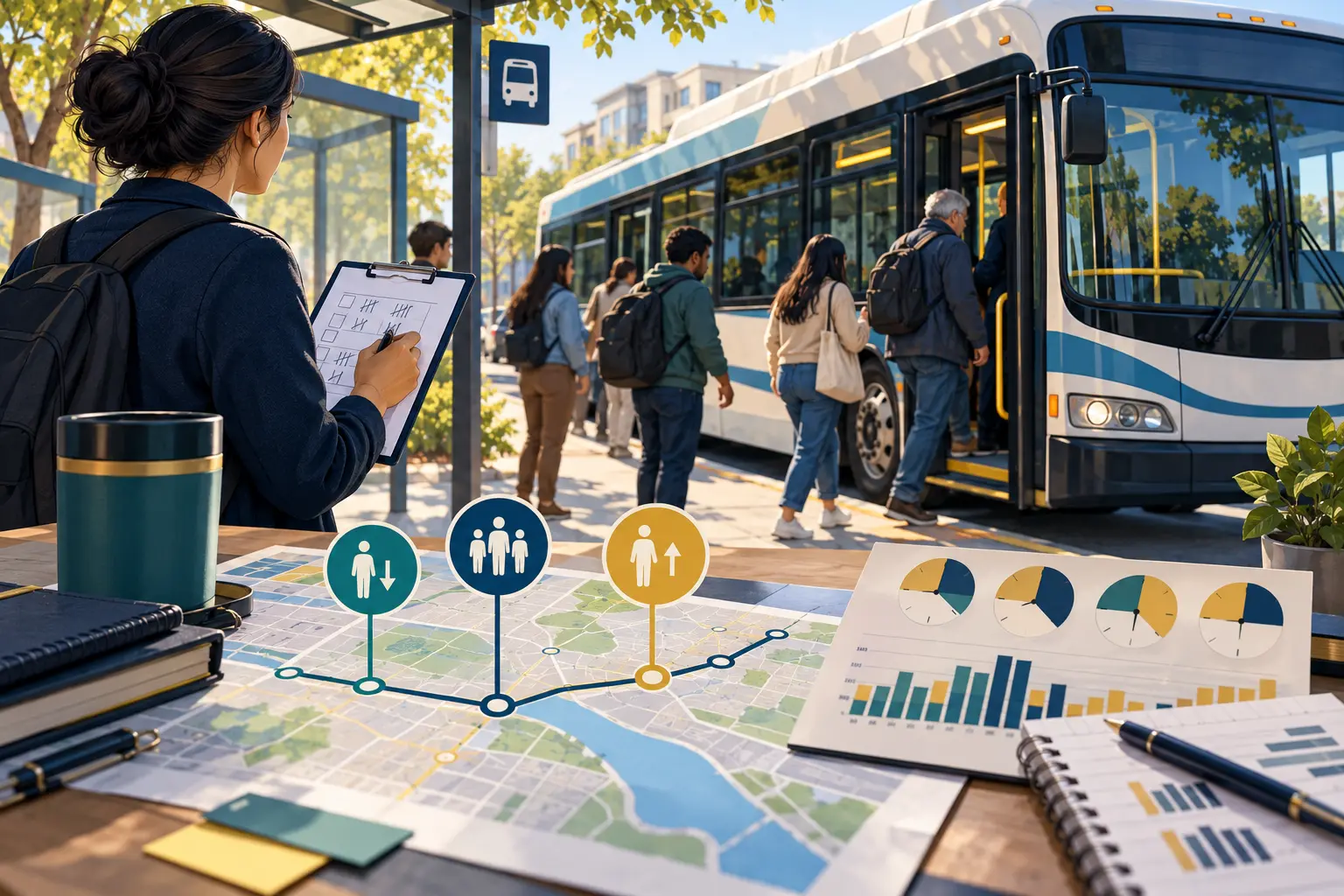
Original editorial illustration; not a photograph of Cathay operations.
Boarding and alighting counts can show where riders use a route, where loads build, and how travel patterns vary by time. But a count collected on the wrong day, at an unclear stop, or without a consistent method can create a false sense of precision. The field plan should be designed around the service decision the agency actually needs to make.
Begin with a decision question
State whether the agency is reviewing stop spacing, schedule time, capacity, transfer activity, seasonal demand, or a proposed service change. The question determines which routes, directions, trips, and stops must be observed.
Avoid collecting every possible detail without a use. A smaller count tied to a defined decision is often more defensible than a large dataset gathered with inconsistent instructions.
Define exactly what observers record
Specify how to count each boarding and alighting, how to handle riders who remain on board, and how to record a stop that is skipped or temporarily relocated. Use stable stop identifiers rather than handwritten names alone.
Record the scheduled and observed trip, direction, date, time, vehicle or run identifier when authorized, weather, service disruption, and any event that could explain unusual demand. Do not collect passenger identity when aggregate counts are sufficient.
Choose representative observation periods
Include the time blocks that matter to the decision, such as school travel, commute peaks, midday service, evenings, or weekends. Check calendars for holidays, school closures, major events, detours, and seasonal conditions before declaring a day typical.
If the system serves areas with strong seasonal variation, plan repeat counts rather than applying one day's pattern to the entire year. Document what the sample can and cannot represent.
- Route, direction, trip, and stop ID.
- Boardings and alightings.
- Observed time and service exceptions.
- Weather, calendar, and event context.
Validate before recommending changes
Train observers with the same examples, compare overlapping sample counts, and investigate impossible or inconsistent records. Reconcile manual observations with available fare, vehicle-location, or automatic passenger count data when those sources are appropriate and their limitations are understood.
Present counts with the observation dates, sample size, missing data, and known disruptions. A recommendation should explain how the evidence supports the decision—not just display totals on a map.
Your next step
Discuss a transit system evaluation or service planning study
Connect with our team to discuss your needs and the available arrangements.