
Public transit
Priority seating and the wheelchair area: what bus riders should know
A little awareness near the front of the bus helps riders who use wheelchairs, mobility aids, or priority seats board and travel more smoothly.
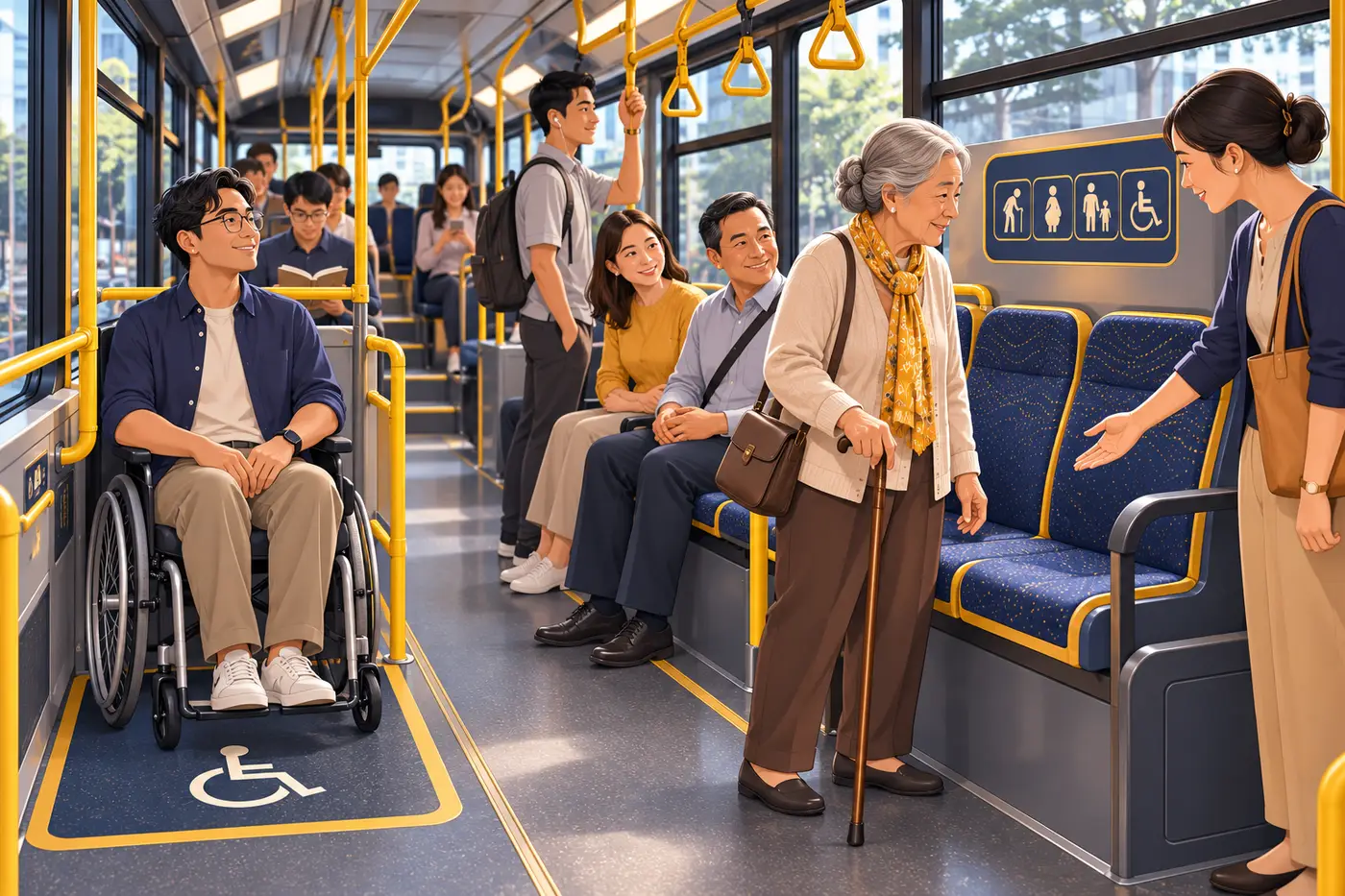
Original editorial illustration; not a photograph of Cathay operations.
The front section of an accessible public bus may serve several needs at once: priority seating, space for a wheelchair, and a clear path to the door. Riders can make that shared area work better by noticing signs, following the operator's directions, and moving belongings before someone needs the space.
Know that the space may need to change
Seats in the wheelchair area may fold up or be used by other passengers when no wheelchair user is aboard. If the area is needed, riders should be prepared to move and make the space available as directed.
MTA guidance says bus operators accommodate riders with disabilities when the bus is not at capacity and wheelchair-priority space is available. Conditions can vary by vehicle, so follow the posted signs and the operator's instructions on the bus you are riding.
Further readingMTA Guide to Accessible Transit (opens in a new tab)Keep the boarding path clear
Move carts, bags, and feet out of the aisle before the ramp or lift is used. Give the operator room to position the boarding equipment and secure a mobility device without crowding the passenger.
Do not touch another rider's wheelchair, scooter, walker, or cane unless that person asks for help. Speak to the rider directly, not only to a companion.
Use priority seats thoughtfully
Not every disability is visible. If you can safely stand or move to another seat, offering a marked priority seat can help someone who has difficulty balancing or walking.
- Read the signs for the specific seating area.
- Keep aisles and securement space free of belongings.
- Follow the operator's directions during boarding.
- Respect the passenger's equipment and personal space.
Plan an alternative when the bus cannot board
A full bus or unavailable space may require waiting for another vehicle. When a trip is time-sensitive, check service information before leaving and allow a reasonable buffer.
For current accessibility procedures, fares, and service conditions, use the official transit agency information for the route you plan to take.
Your next step
Explore public transit planning support
Connect with our team to discuss your needs and the available arrangements.