Ambulette
A tilt-in-space wheelchair needs a detailed ambulette plan
Share the chair configuration, dimensions, supports, access conditions, and approved travel position before the scheduled trip.
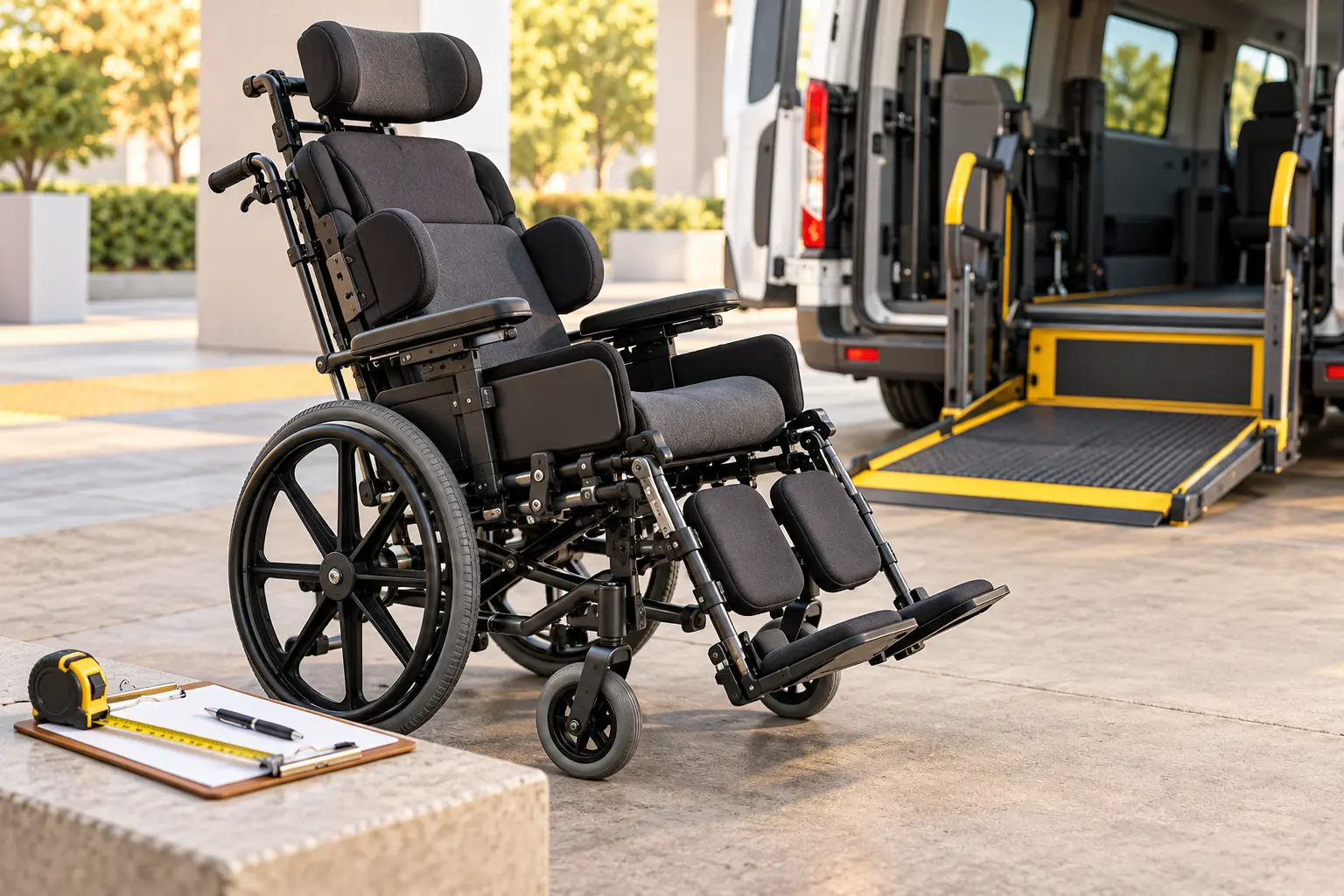
Original editorial illustration; not a photograph of Cathay operations.
A tilt-in-space or highly customized wheelchair may be larger and configured differently from a standard manual chair. Head supports, leg supports, recline or tilt settings, trays, and powered components can affect vehicle compatibility and the pickup process. The transportation provider needs accurate equipment details before assigning a vehicle.
Name the chair and its configuration
Explain that the passenger uses a tilt-in-space, reclining, powered, or other customized wheelchair. Share the manufacturer or model when known, along with the chair's overall width, length, height, and any relevant weight information requested by the provider.
Describe the position the passenger must maintain during travel. The transportation provider—not the family or facility—must determine whether its vehicle and securement system can accommodate the stated configuration.
Account for every support and attachment
List headrests, lateral supports, elevating leg rests, oxygen holders, trays, communication devices, bags, and other attachments. Identify which items are medically or functionally required and which are removable.
Do not remove positioning supports or change a prescribed setup merely to make the chair smaller. Questions about the passenger's seating position belong with the appropriate clinical team and transportation provider.
Review the entire access path
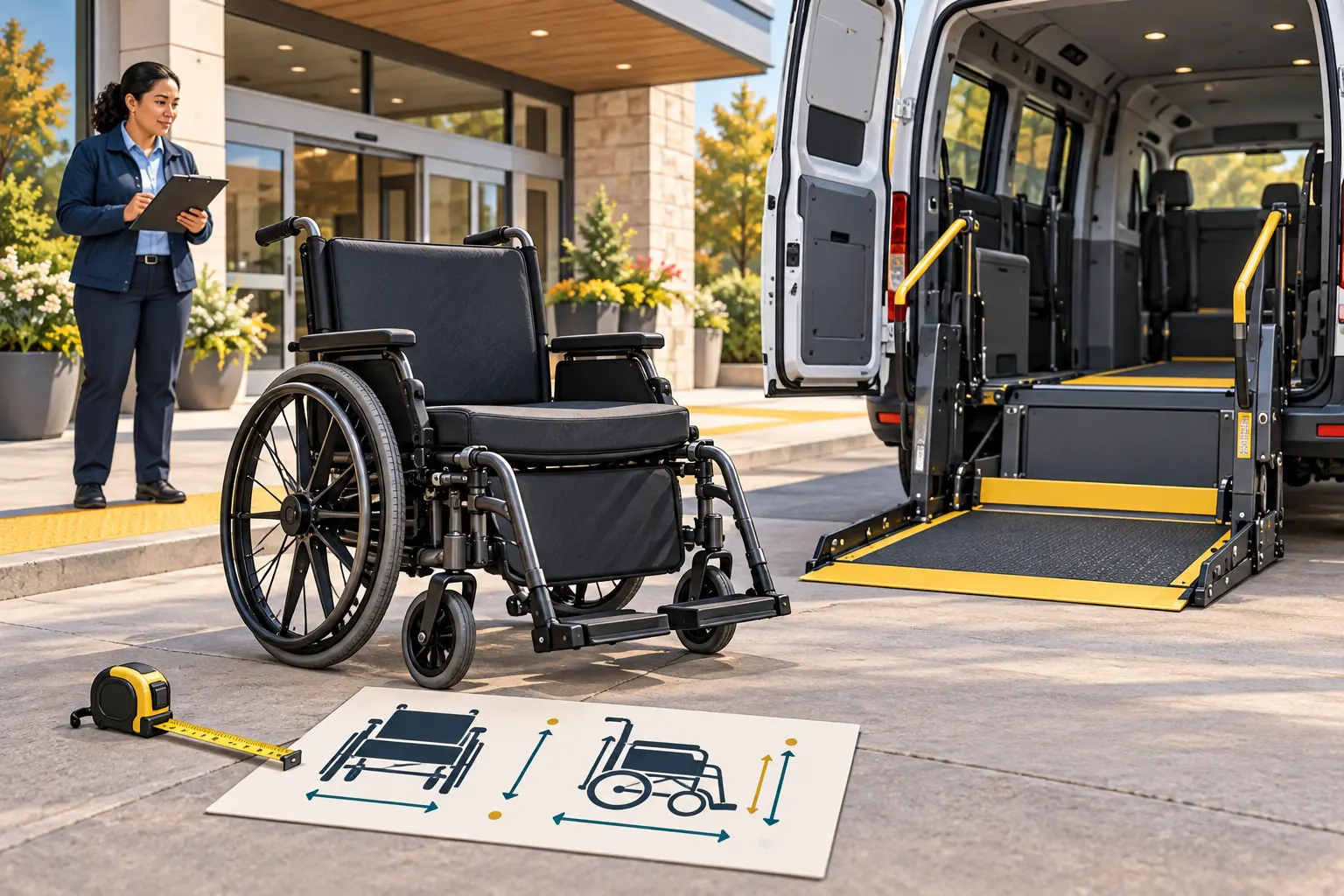
Measure or describe doorways, ramps, elevators, turns, thresholds, and the approved vehicle loading area at both ends. A chair that fits the vehicle may still be unable to reach it through a narrow doorway or blocked hallway.
Identify one responsible contact at the origin and one at the destination who can answer equipment and access questions.
- Wheelchair type and dimensions.
- Required travel position.
- Supports and attachments.
- Origin and destination access.
Report changes before pickup
Tell the transportation office if the passenger receives a replacement chair, new headrest, different leg supports, or another configuration change. An earlier reservation is not proof that a changed chair will fit the same vehicle.
Bring only items that were included in the confirmed plan, and keep loose belongings organized. If the provider cannot verify safe compatibility, the trip may need a different arrangement rather than an improvised travel-day solution.
Your next step
Discuss a customized-wheelchair ambulette trip
Connect with our team to discuss your needs and the available arrangements.