Public transit
Taking a walker on the bus: plan the boarding steps before the trip
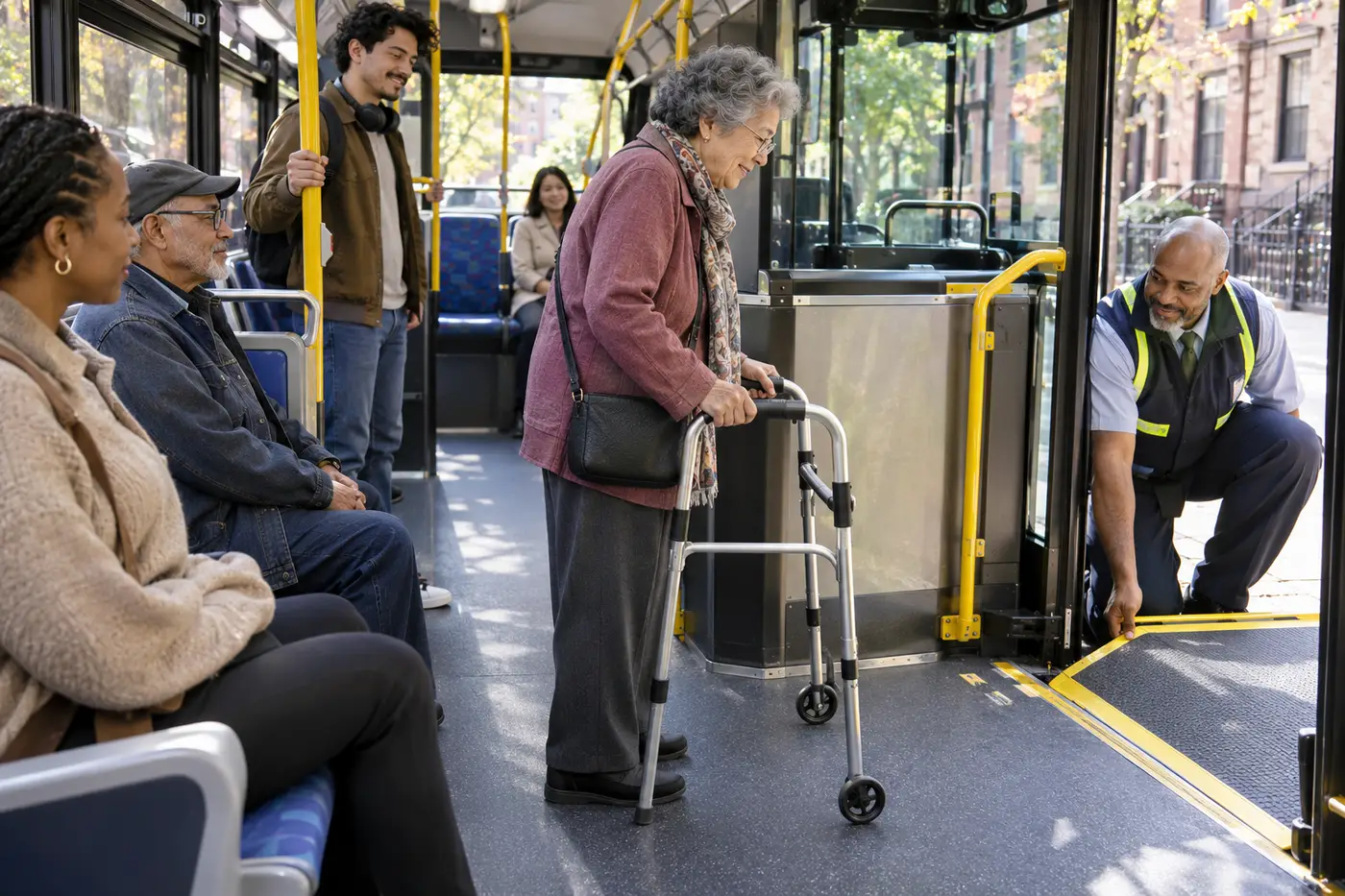
Wait where the operator can see you, ask about kneeling or the ramp when needed, control the walker, and keep the aisle clear once aboard.
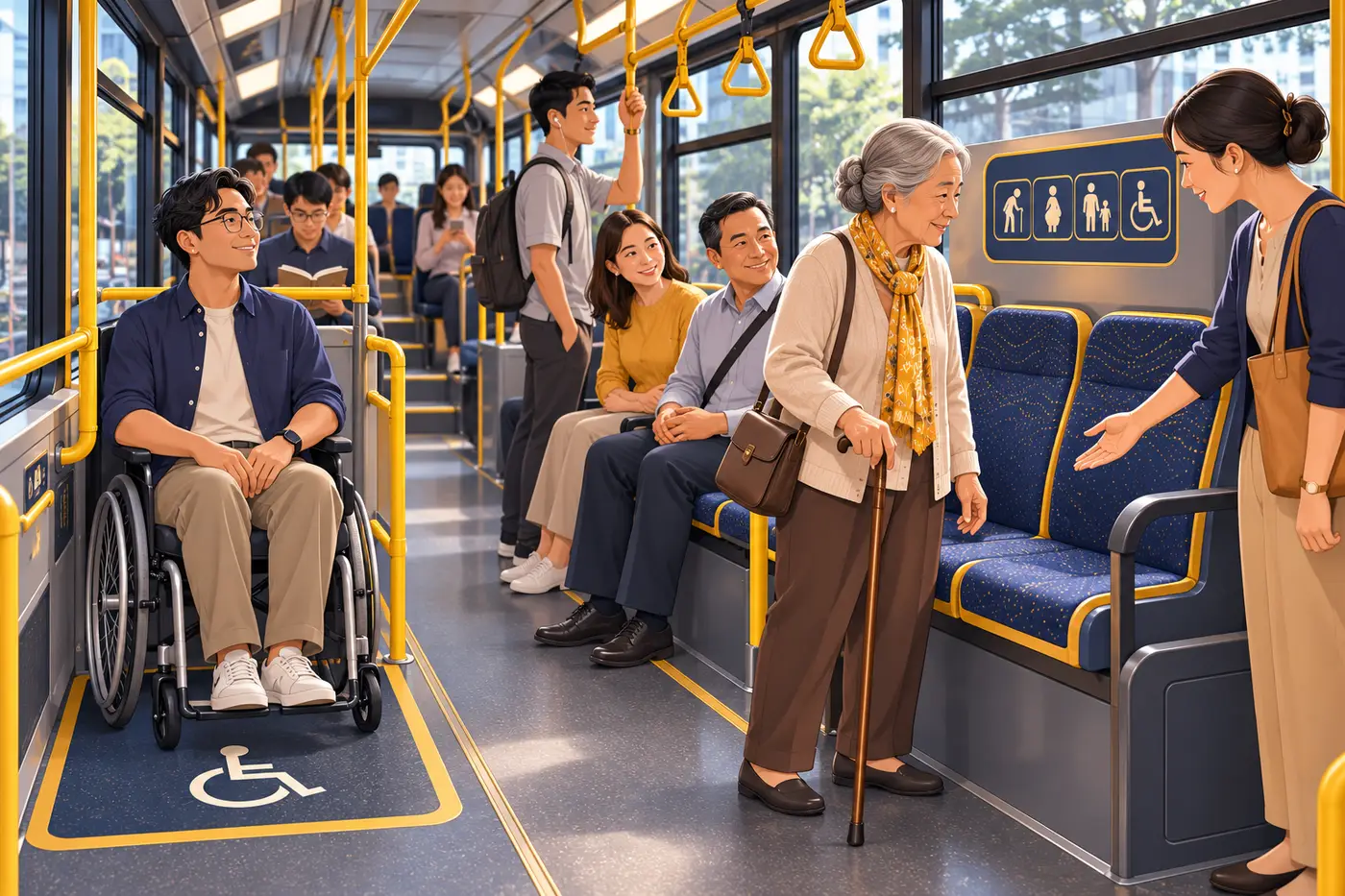
Original editorial illustration; not a photograph of Cathay operations.
A walker can make the walk to the bus stop possible, but boarding still requires a plan for the curb, fare payment, seating, and the device itself. Practicing the sequence during a low-pressure trip can help a rider know what to request and where to move without rushing at the front door.
Wait where the operator can see you
Use the marked stop and stay back from the curb until the bus is fully stopped. Check the route and destination sign before boarding so you do not have to reverse direction with the walker in the doorway.
The MTA’s accessible-transit guidance says operators can kneel the bus and deploy the ramp or lift when appropriate. Tell the operator what you need rather than assuming the boarding setup.
Further readingMTA Guide to Accessible Transit on Buses and Subways (opens in a new tab)Board without letting the walker roll away
Keep the device under your control and follow the operator’s instructions. If the walker folds, practice the manufacturer’s folding method before travel; do not experiment while blocking the doorway.
A companion may help when asked, but should not pull the rider or move the walker unexpectedly. The rider should choose the safest available sequence for sitting and positioning the device.
Settle into a safe place
Use an available seat and keep the walker out of the aisle, doorway, and wheelchair securement area. Do not let bags hang from the frame where they can shift or change the device’s balance.
- Route and correct travel direction.
- Accessible stop location.
- Fare method within easy reach.
- A clear plan for seating and the walker.
Plan the exit before the stop
Track the stop before yours and request the stop with enough time to gather belongings. Wait until the bus is fully stopped before standing and unfolding or repositioning the walker.
For current boarding procedures and accessibility assistance, use the official information for the transit agency operating the route.
Your next step
Prepare for an accessible bus trip
Connect with our team to discuss your needs and the available arrangements.