Ambulette
Wheelchair securement on an ambulette trip: what passengers can prepare
Know the difference between securing the wheelchair and positioning the passenger, and keep attachment areas clear for a scheduled ride.
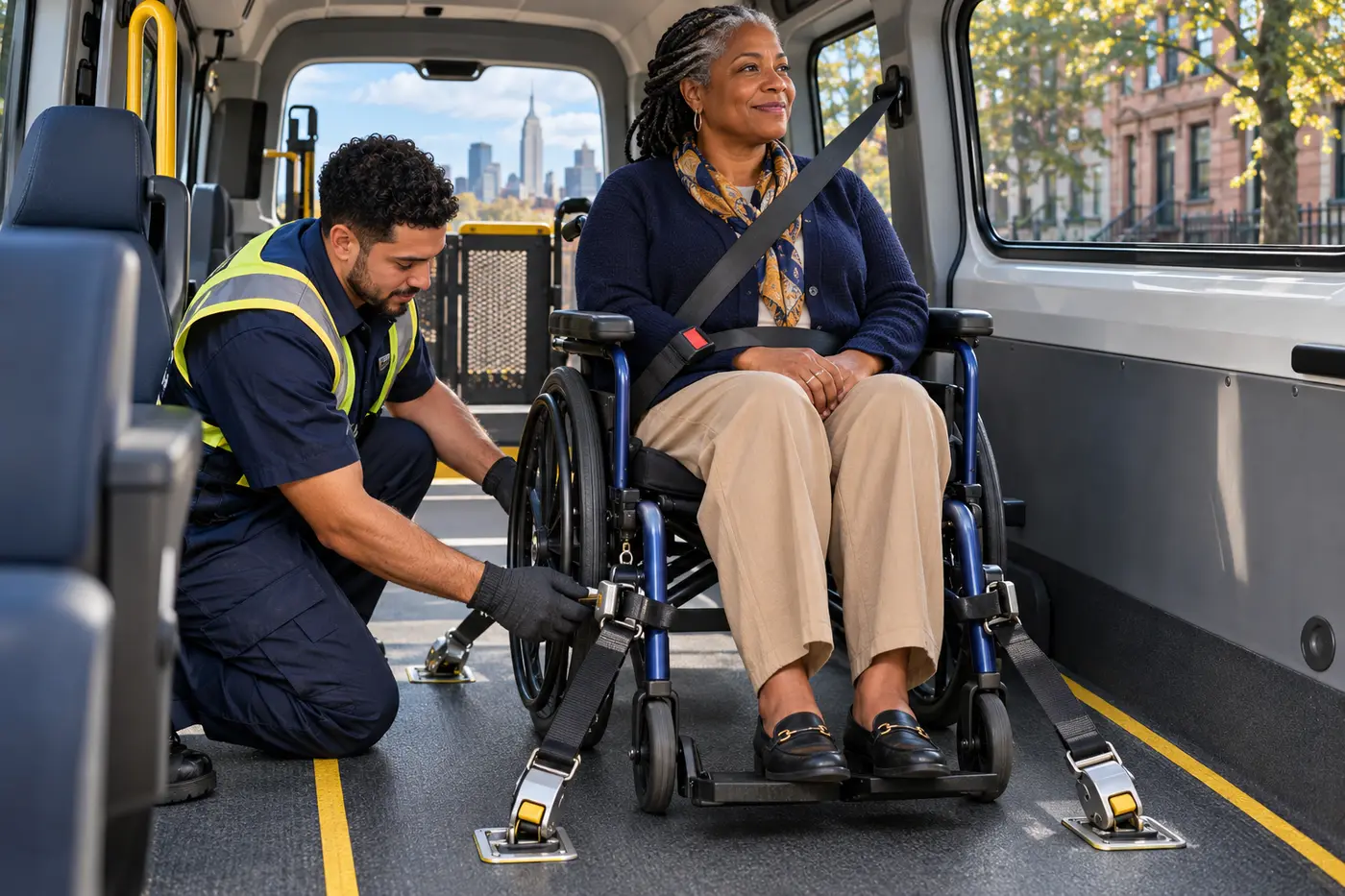
Original editorial illustration; not a photograph of Cathay operations.
Wheelchair securement is part of the vehicle process, not something a passenger should improvise with bags, personal straps, or chair accessories. A pre-trip check can keep the chair's frame accessible and give the transportation team accurate information before boarding.
Keep the securement area clear
Remove or reposition shopping bags, oxygen carriers, blankets, and loose straps that cover the chair frame or interfere with wheels and footrests. Do not tie personal items to a point that transportation staff may need to reach.
Tell the provider about unusual frames, powered seating, removable parts, or accessories during booking. The driver or trained staff should use the vehicle's equipment according to the provider's procedures.
Understand the two separate functions
Wheelchair securement keeps the mobility device in its designated space. A seat belt or shoulder harness, when used under the applicable policy, is a separate occupant-restraint function; one should not be substituted for the other.
Federal Transit Administration guidance describes wheelchair securement and the passenger belt or harness as separate parts of an accessible bus or van system. Riders should ask the operating provider how its vehicle and policy apply to the scheduled trip.
Further readingFederal Transit Administration: wheelchairs and bus or van service (opens in a new tab)Share changes before pickup
Report a different wheelchair, new cushion, cast, leg support, recline position, or equipment mounted to the frame. A chair that changed after the reservation may need a new practical review.
Cathay Express Transportation provides scheduled non-emergency transportation. An urgent medical problem requires emergency services, not an ambulette pickup.
- Frame and securement areas unobstructed.
- Loose accessories and bags contained.
- Chair controls, brakes, and footrests working.
- Provider informed of equipment changes.
Ask before adjusting equipment
The passenger should explain comfort and positioning needs, but family members should not move vehicle securement hardware or release it during travel. Raise any concern with transportation staff before the vehicle moves.
Your next step
Prepare for a wheelchair ambulette trip
Connect with our team to discuss your needs and the available arrangements.