Ambulette
Rain in the forecast? Prepare the wheelchair pickup point before the ambulette arrives
A covered waiting place, clear curb path, protected belongings, and an early update can make a wet-weather wheelchair trip easier to coordinate.
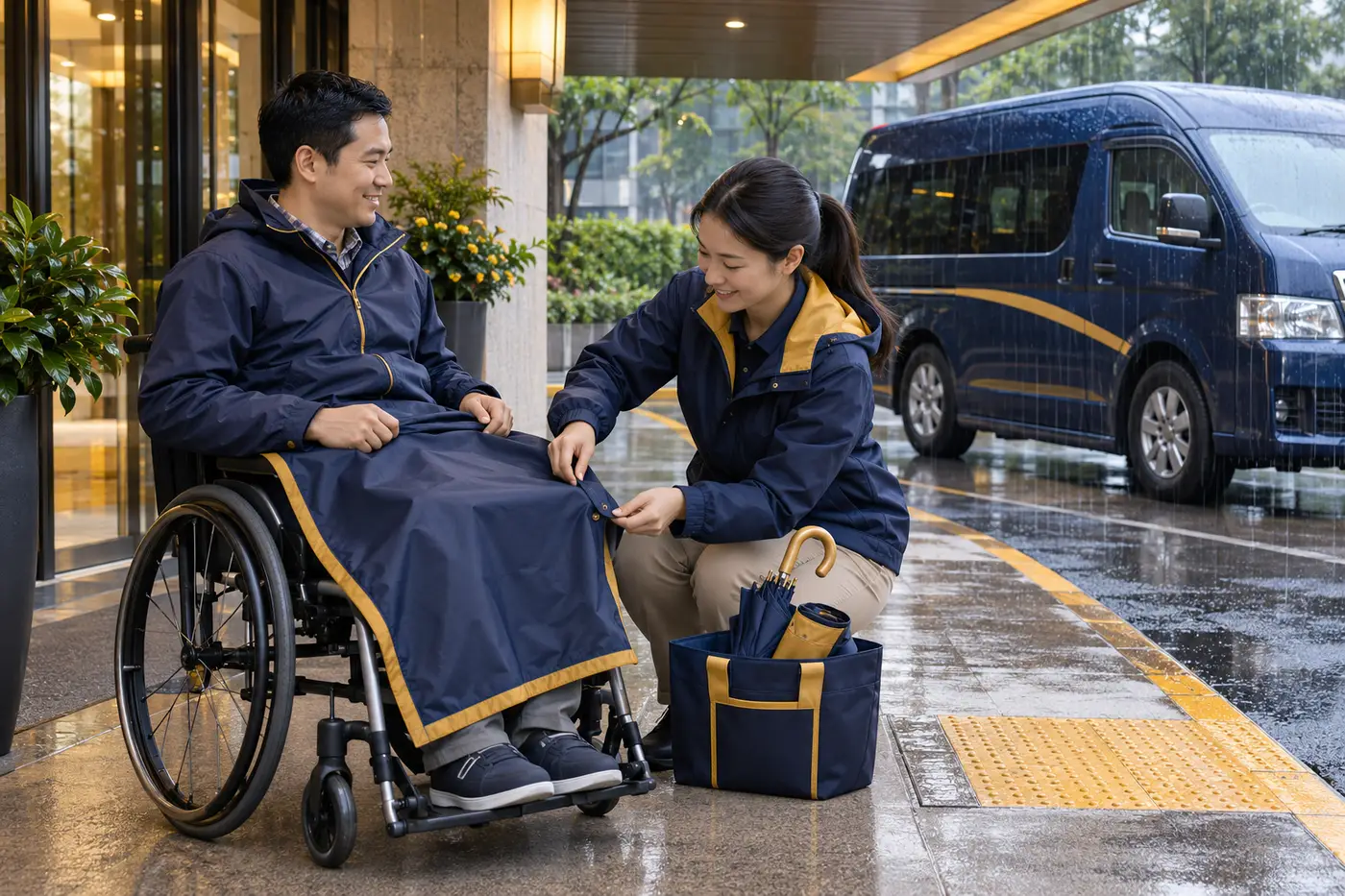
Original editorial illustration; not a photograph of Cathay operations.
Rain can turn a routine wheelchair pickup into a difficult transfer between the building and vehicle. The useful preparation is not simply carrying an umbrella. It is confirming a dry waiting place, keeping the accessible path clear, protecting essential belongings, and telling the transportation provider when weather changes the planned entrance.
Choose a covered waiting location
Identify an awning, vestibule, lobby, or other sheltered place near the loading point. Confirm that the passenger can wait there without blocking doors and that the vehicle can approach the nearby curb safely.
Do not move the pickup to a different entrance without updating the reservation. A dry entrance is only helpful if the driver and passenger are expecting the same location.
Check the entire path to the curb
Look for pooling water, slippery leaves, temporary mats, steep curb ramps, and construction barriers. Building staff should address the property conditions they control before the scheduled ready time.
Keep the route wide enough for the wheelchair and any companion. Umbrellas, bags, and loose covers should not hang into the wheels or interfere with normal movement.
Protect belongings without changing the chair
Use weather protection that is intended for the wheelchair or personal equipment, and follow the manufacturer’s instructions. Keep appointment papers, identification, medication, and electronics in a dry bag that stays with the passenger.
- Covered waiting point and exact entrance.
- Clear route between building and curb.
- Dry storage for essential belongings.
- Updated contact number for weather changes.
Reconfirm if conditions become unsafe
Call the provider when flooding, strong wind, building closure, or an inaccessible curb changes the trip. Do not wait until the vehicle arrives to disclose that the normal route cannot be used.
This article addresses transportation logistics only. Questions about wheelchair equipment or medical needs should be directed to the appropriate manufacturer, supplier, or care professional.
Your next step
Discuss a rainy-day wheelchair trip
Connect with our team to discuss your needs and the available arrangements.