Ambulette
Check a manual wheelchair before the ambulette arrives
A brief visual check of the wheelchair, removable parts, and access path can reveal a problem before a non-emergency trip begins.
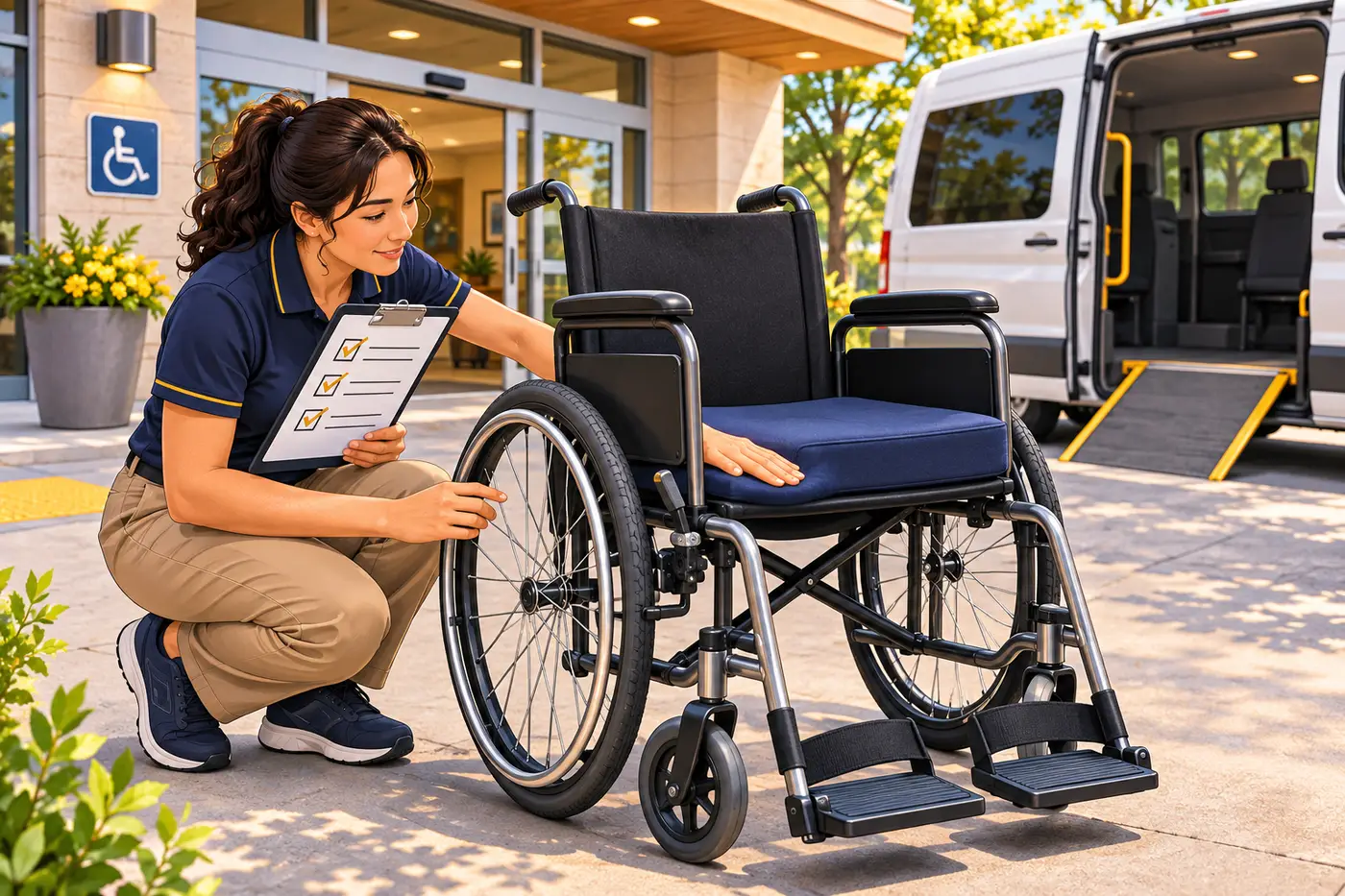
Original editorial illustration; not a photograph of Cathay operations.
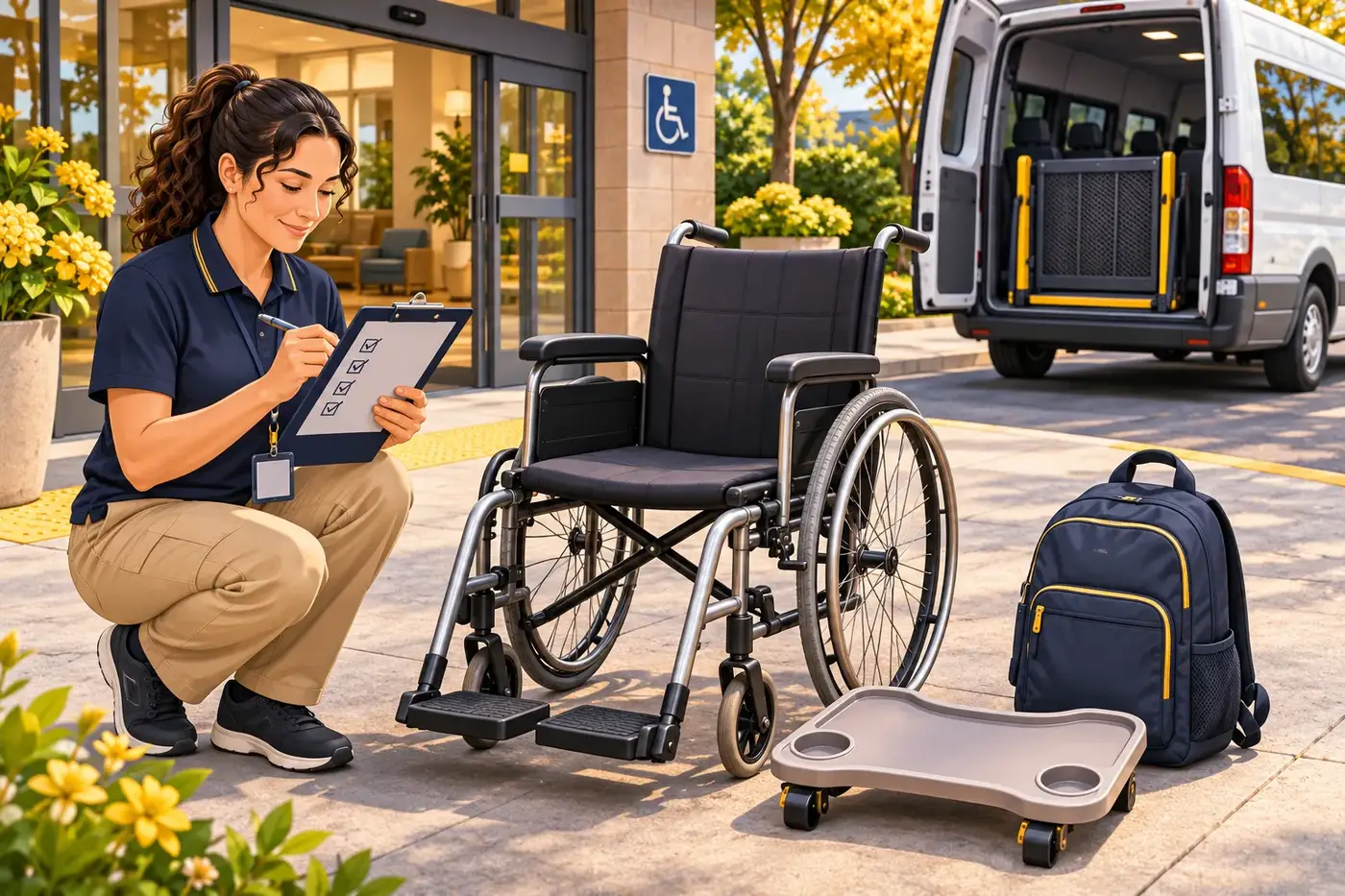
A manual wheelchair is part of the travel setup, not simply an item placed in the vehicle. Before a non-emergency ambulette pickup, look over the chair and gather its removable pieces so a loose footrest, missing cushion, or obvious tire problem is not discovered at departure time. This is a readiness check, not a repair or clinical assessment.
Look for visible changes
Compare the chair with how it normally looks and moves. Check whether the tires appear properly seated, the wheel locks operate as expected, the footrests and armrests are attached correctly, and the cushion is in place.
If something is damaged, loose, or unfamiliar, contact the wheelchair supplier or other qualified resource rather than improvising a repair for the trip. Tell the transportation provider promptly if the chair cannot be used as reserved.
Account for every removable part
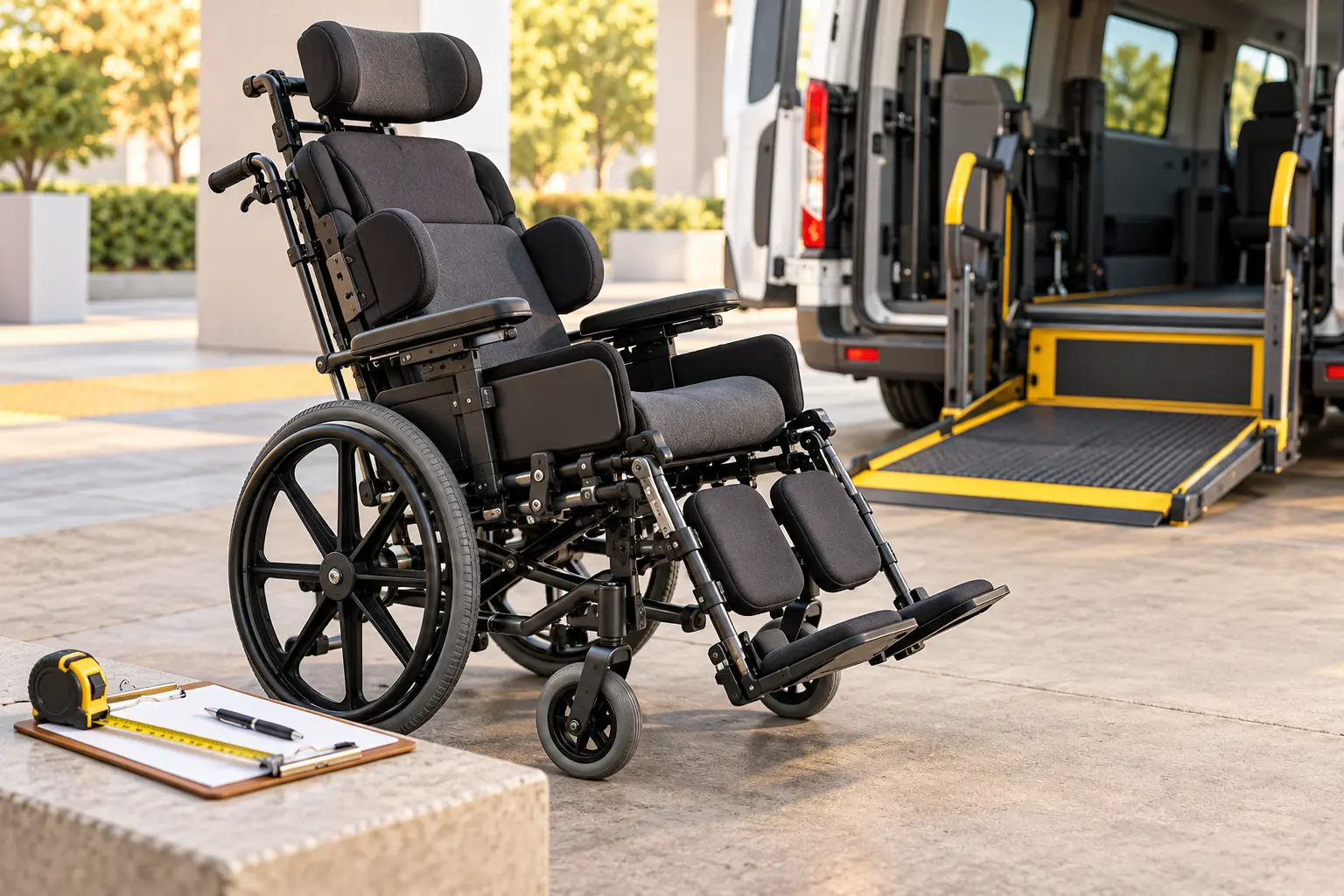
Footrests, cushions, trays, oxygen holders, bags, and other accessories can change the chair's overall size or require separate handling. Identify what will remain attached and what will travel separately.
Remove or secure loose personal items according to the equipment instructions and provider guidance. Keep medication, identification, appointment papers, and valuables with the passenger or responsible companion.
Clear the path to pickup
Confirm that the route from the room or apartment to the vehicle is available. Check elevators, door widths, temporary construction, snow or leaves, and the location where the vehicle can safely load.
- Chair condition and removable accessories.
- Passenger contact and responsible companion, if any.
- Exact entrance and accessible route.
- Any equipment change since the reservation.
Report a change instead of hiding it
A different wheelchair, newly added accessory, or visible equipment problem may affect the trip setup. Sharing the change early gives the provider time to review vehicle and securement needs.
This guidance covers transportation logistics only. Wheelchair maintenance and fit questions should be directed to the manufacturer, supplier, or the passenger's appropriate care professional.
Your next step
Discuss a wheelchair trip setup
Connect with our team to discuss your needs and the available arrangements.