Ambulette
Before an ambulette trip, identify every removable wheelchair item
A tray, cushion, bag, controller cover, or other loose component needs its own travel plan so the chair can be prepared without last-minute confusion.
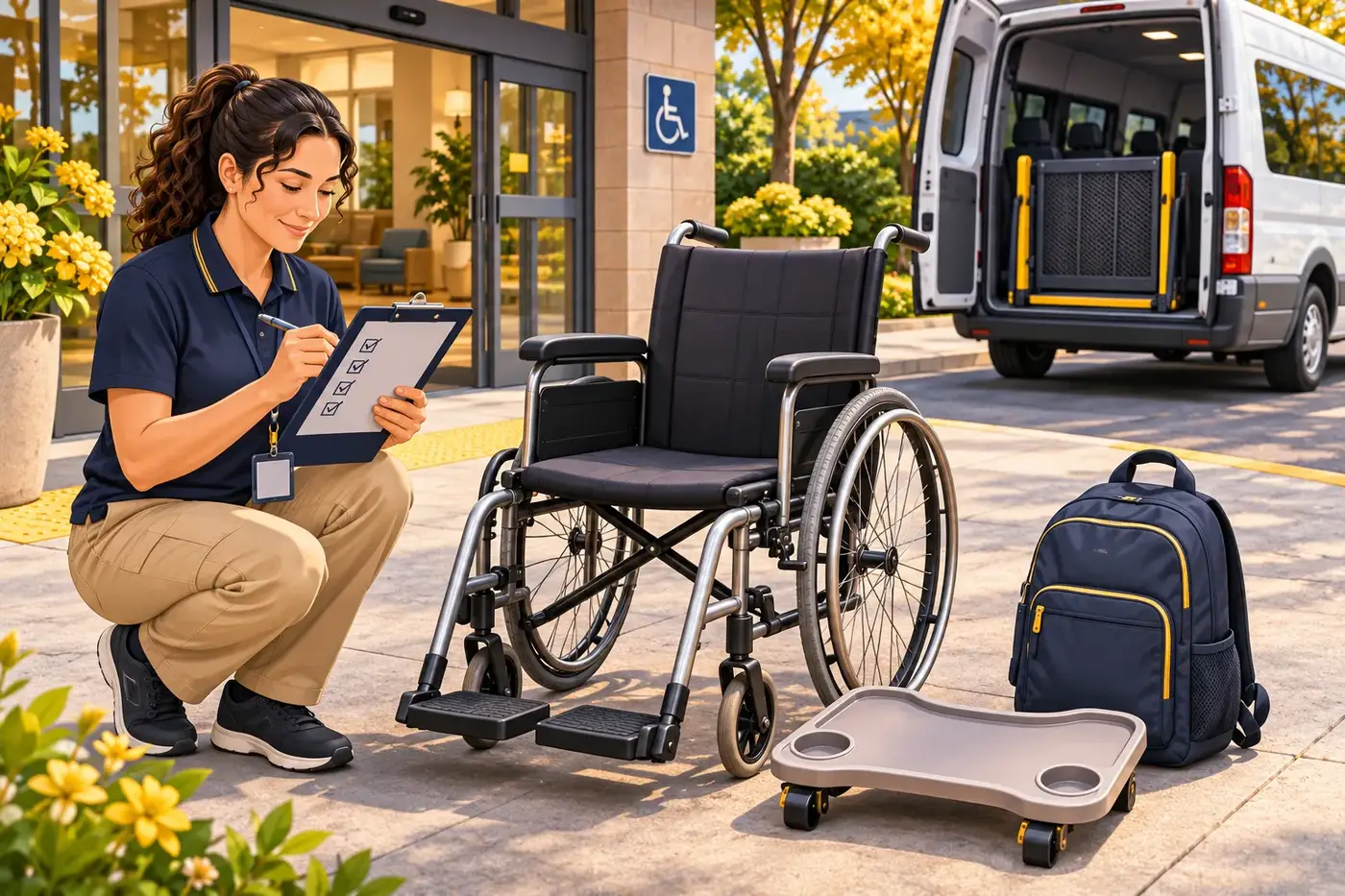
Original editorial illustration; not a photograph of Cathay operations.
Wheelchairs often carry more than the passenger. A lap tray, positioning cushion, backpack, cup holder, oxygen holder, controller cover, or other accessory may be essential at the destination but removable during boarding or vehicle securement. Listing those items before an ambulette trip helps the passenger and provider agree on what will remain attached, what will be stored, and who is responsible for each piece.
Describe the chair and its attachments
Tell the booking office whether the chair is manual or powered and name the removable items that will travel. Do not rely on a general statement such as “standard wheelchair” when a tray, head support, lateral support, bag, or communication device changes the chair's profile.
Share the chair's overall dimensions when an attachment makes it unusually wide or long. The provider can then review vehicle access and trip details before pickup day.
Decide what comes off before boarding
Ask which loose or projecting pieces should be removed before the chair approaches the vehicle. Follow the wheelchair manufacturer's instructions and the passenger's established care plan; transportation staff should not improvise adjustments to clinical positioning equipment.
Place each removed item in a labeled bag or protective sleeve when practical. Keep essential controls, communication devices, and medication with the passenger or responsible companion rather than in an unmarked storage area.
Assign responsibility for every piece
Clarify who can detach and reinstall a tray or accessory, who will carry it, and where it will be stored during travel. A driver should not be expected to disassemble specialized equipment unless that task has been specifically reviewed and accepted.
- Chair type and approximate dimensions.
- Removable trays, cushions, bags, and supports.
- Who can remove and reinstall each item.
- Where loose items will travel.
Check the return setup
Before leaving the destination, count the items and confirm that the chair is ready for the return pickup. If an appointment changes the chair setup or adds equipment, contact the transportation provider before the vehicle arrives.
This is logistical guidance for a planned non-emergency trip, not advice about wheelchair configuration or medical positioning.
Your next step
Review an ambulette trip with wheelchair accessories
Connect with our team to discuss your needs and the available arrangements.