Public transit
Snow or ice at the bus stop: choose a safer winter boarding plan
Check service alerts, inspect the curb approach, use a cleared accessible stop when available, and leave time for a winter alternate.
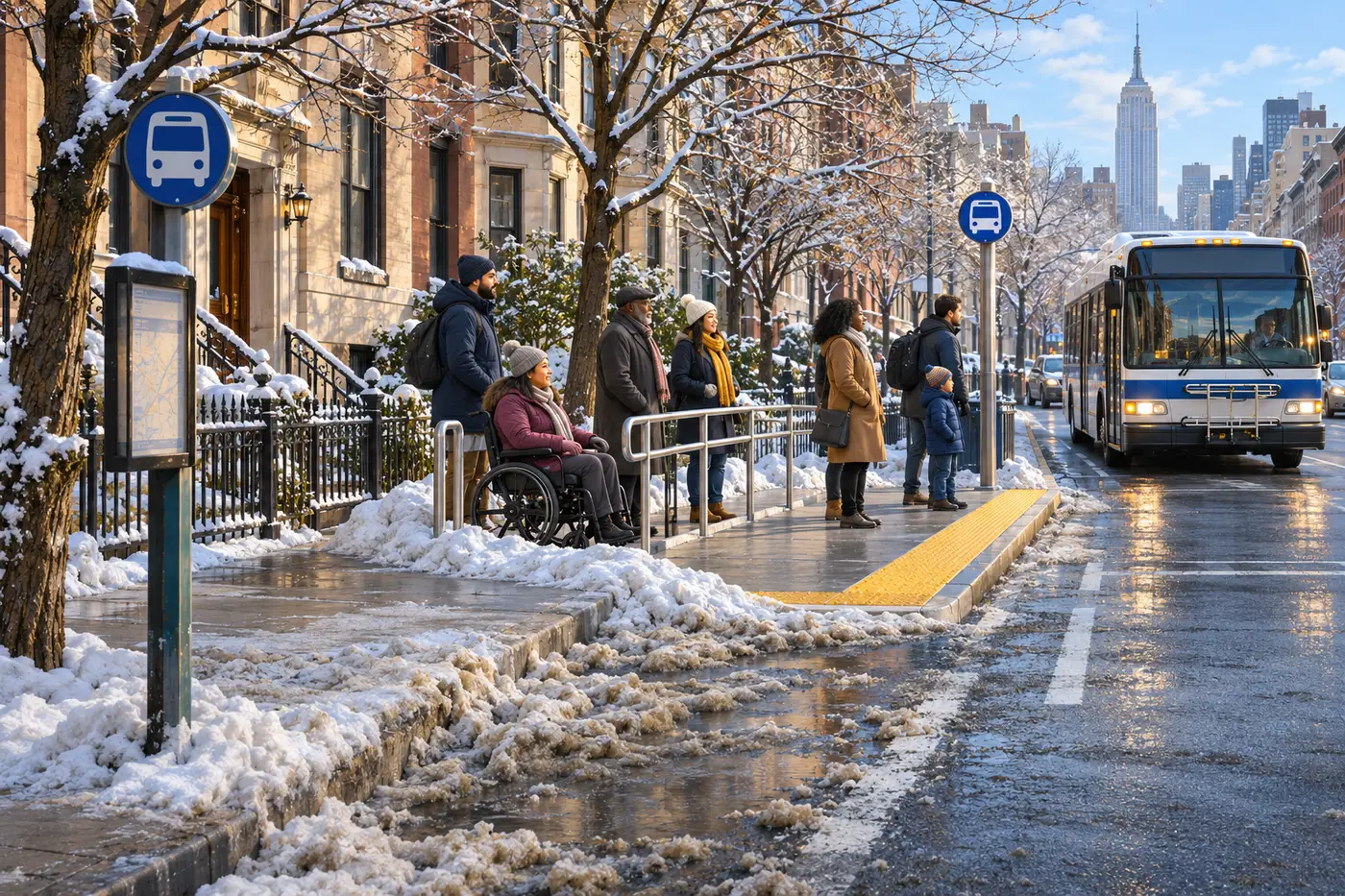
Original editorial illustration; not a photograph of Cathay operations.
A bus may be operating while the usual approach to the stop is blocked by a snowbank, slush, or ice. The safest response is not to stand in traffic or climb over a pile: check current service information and choose a boarding location with a clear path and stable waiting area.
Check the route before leaving
Review the transit agency's current alerts, route changes, and stop information. Winter detours can move or temporarily close a stop even when the route appears normal on a saved map.
Share the planned route and expected arrival with a family member when conditions are difficult. Allow extra time for slower walking and a longer path to an alternate stop.
Further readingMTA service status (opens in a new tab)Inspect the complete boarding path
Look for a clear sidewalk, stable waiting space, and a curb area the bus can approach. A cleared pole does not help if the curb cut or path to the front door is blocked.
Do not wait in the roadway, step onto a snowbank, or signal from between parked vehicles. If the stop cannot be reached safely, use a nearby accessible stop or another travel option.
Make mobility equipment winter-ready
Wear footwear with suitable traction and keep both hands available when possible. Remove loose snow from a cane, walker, wheelchair wheels, or footwear before boarding so it does not create a wet obstacle for other riders.
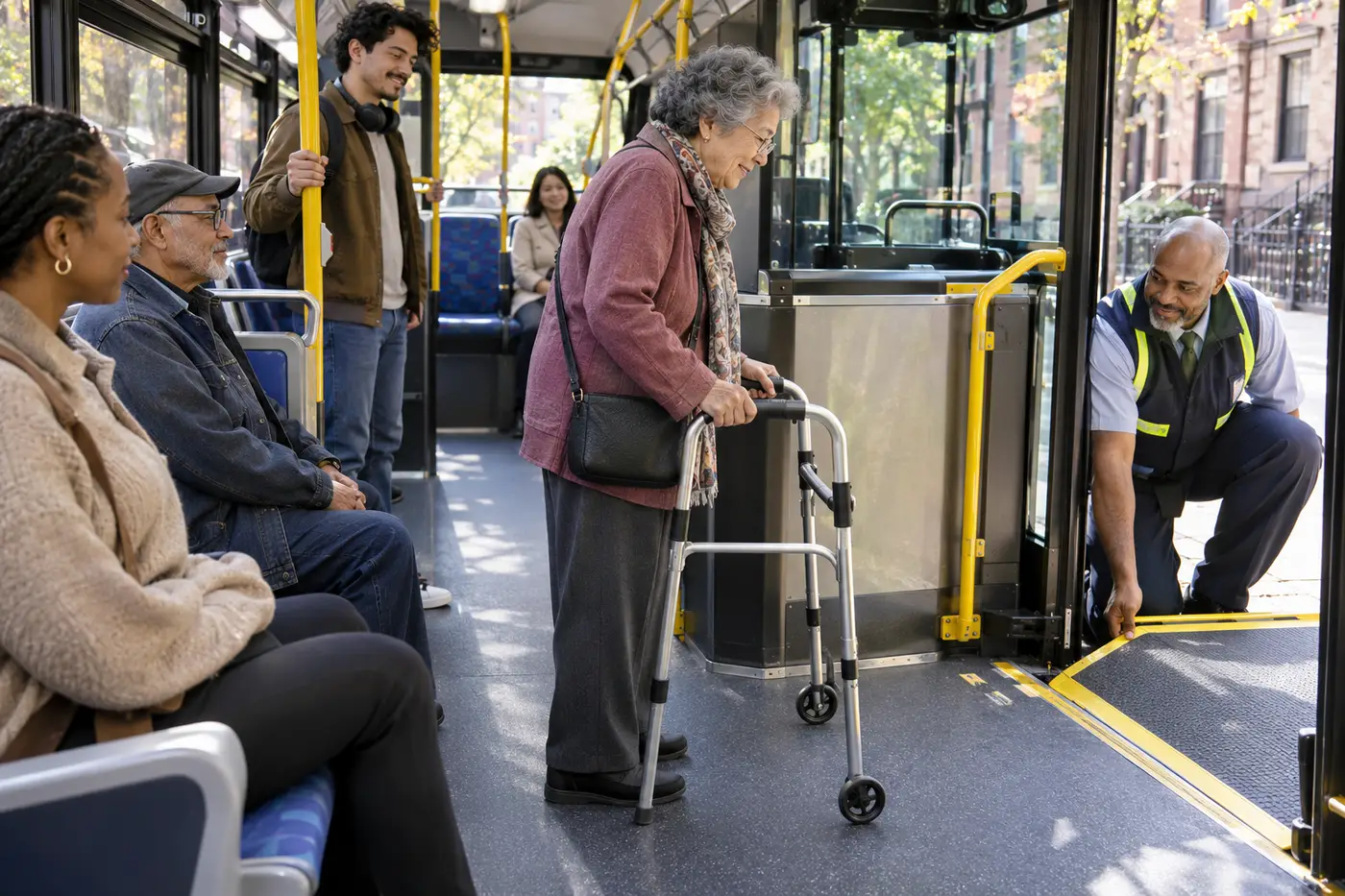
Ask the operator about the appropriate boarding assistance when needed. Keep bags compact and out of the doorway and aisle.
- Current service alert and travel direction.
- Cleared sidewalk, curb approach, and waiting area.
- Alternate stop known before the trip.
- Charged phone and warmer backup location.
Know when to postpone
If the path, stop, or weather is beyond the rider's safe ability, delay the trip when possible. For urgent needs, contact the appropriate emergency or care resource rather than taking an unsafe route to the bus.
Your next step
Plan a winter public-transit trip
Connect with our team to discuss your needs and the available arrangements.