Public transit
Your bus stop moved for construction: find the temporary stop safely
Read the current alert, confirm the route and direction, follow official temporary signs, and leave time for the extra walk.
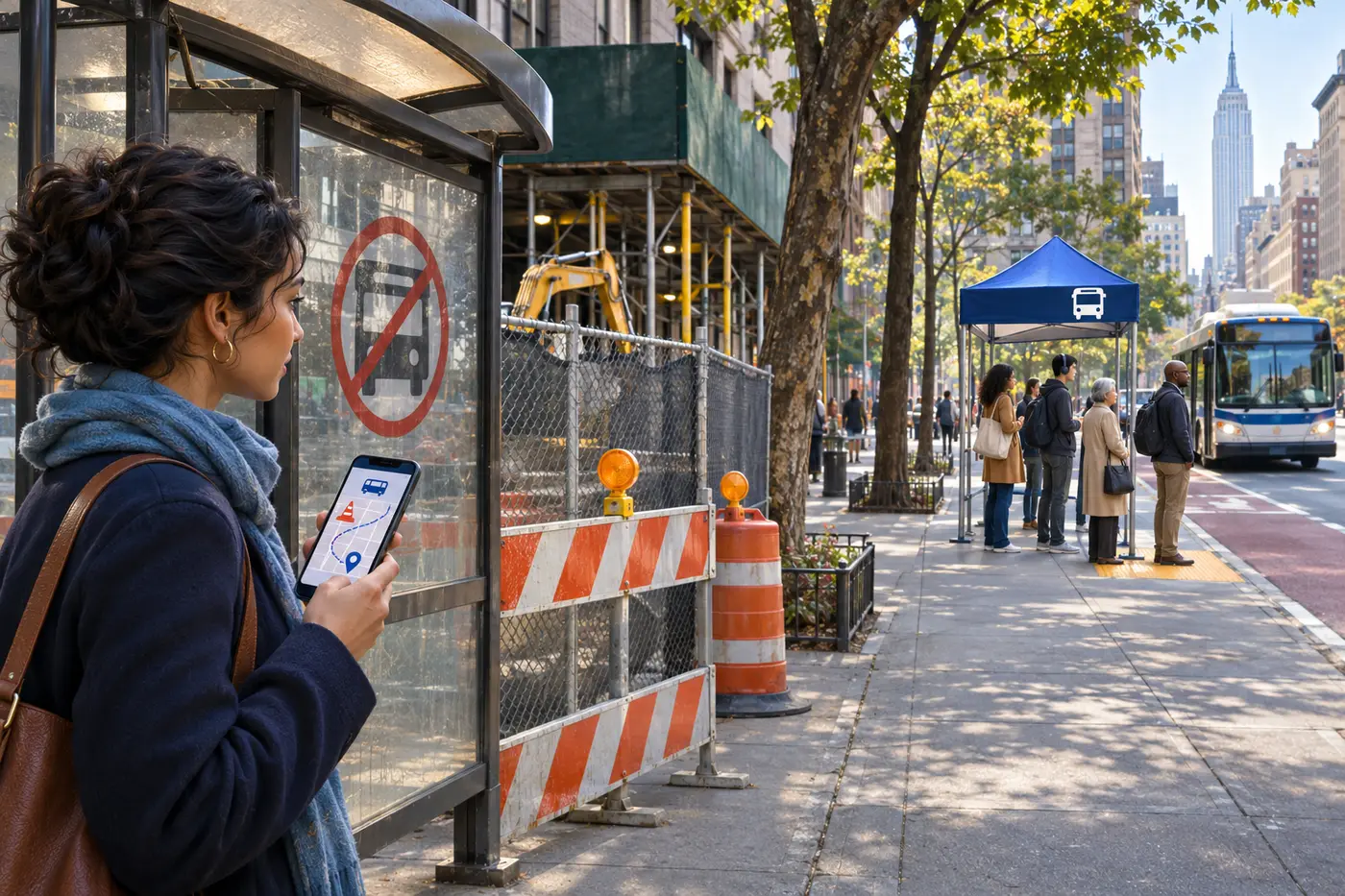
Original editorial illustration; not a photograph of Cathay operations.
Construction can close a familiar bus stop or move it to another side of an intersection. The temporary location may not appear where a rider expects, and live arrival estimates can be less precise in a detour area. A deliberate stop check prevents a last-minute crossing or unsafe wait beside work equipment.
Read the entire service alert
Confirm the route, direction, closed stop, temporary location, and effective period. A notice for the opposite direction may describe a different block or intersection.
Use the transit agency's current alert and posted signs rather than an old screenshot. Construction conditions and temporary boarding points can change.
Further readingMTA service status and alerts (opens in a new tab)Walk the safe path, not the shortest line
Use open sidewalks and designated crossings. Do not step through a work zone, stand behind a barrier, or wait where the operator cannot reach the curb.
If the temporary stop requires crossing, allow enough signal cycles and stay visible. Riders using mobility devices should check curb cuts and sidewalk width before committing to the block. A companion can scout the route first when the work area makes the accessible path unclear.
Confirm the bus at the new location
Look for official temporary-stop information and verify the route and destination sign as the bus approaches. Several routes may share the temporary curb.
Arrival information may be disrupted during a detour, so use it as one input rather than the only proof that the bus has passed. Note the nearest safe shelter or staffed location if the temporary stop has a longer wait.
- Route and travel direction verified.
- Temporary stop located on the correct block.
- Accessible sidewalk and crossing identified.
- Extra walking and waiting time included.
Choose an alternate when needed
If the temporary location is not safely reachable, check another accessible stop or route and contact the transit agency for current assistance. Do not wait in the roadway or outside the signed boarding area.
Your next step
Prepare for a temporary bus stop
Connect with our team to discuss your needs and the available arrangements.